
Threadsight: Turning user feedback into product wins
Problem
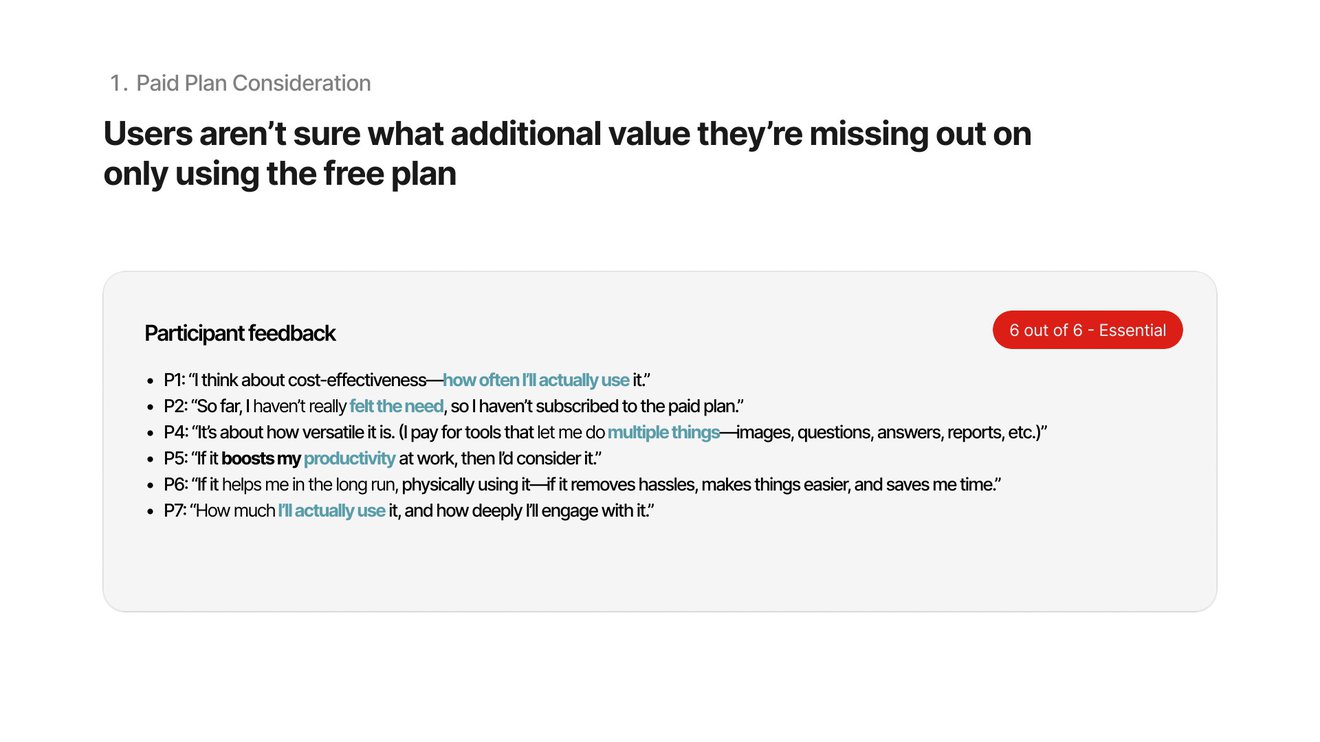
Threadsight, a thread analytics and scheduling tool for Threads users, was gaining traction but struggling to convert free users to paid plans. Many users reported frustration with the platform’s usability and a lack of clarity on the value of upgrading. Key workflows, like saving and scheduling posts, felt unintuitive and inefficient.
My role
- Co-led a UX research team
- Designed and conducted user interviews and usability testing
- Led analysis of behavioral pain points and conversion barriers
- Delivered prioritized insights and collaborated with design and product leads
- Helped reframe product narrative to emphasize ease of use, productivity, and ROI
Solution
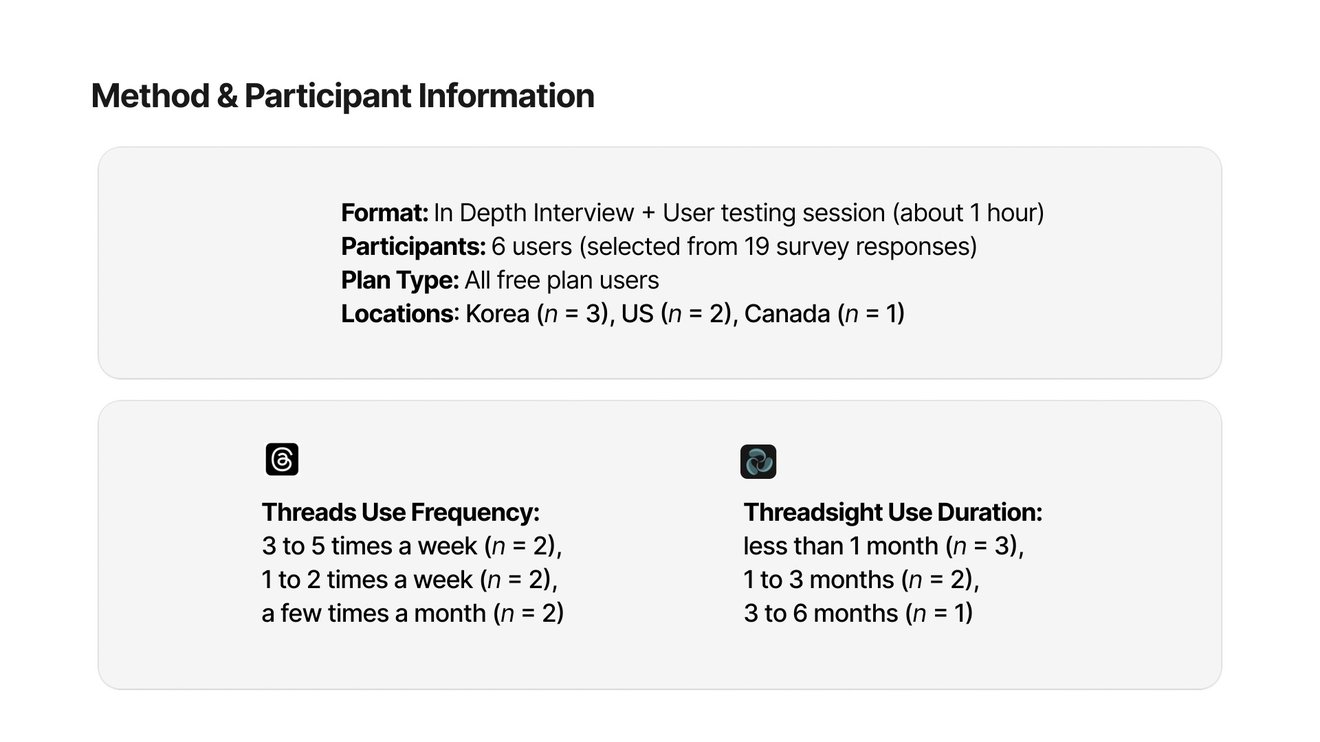
As UXR co-lead, I helped design and implement a multi-phase study on usability and conversion. We conducted heuristic evaluations, user interviews, and competitive analysis to understand the core friction points in the product experience.
Key issues identified
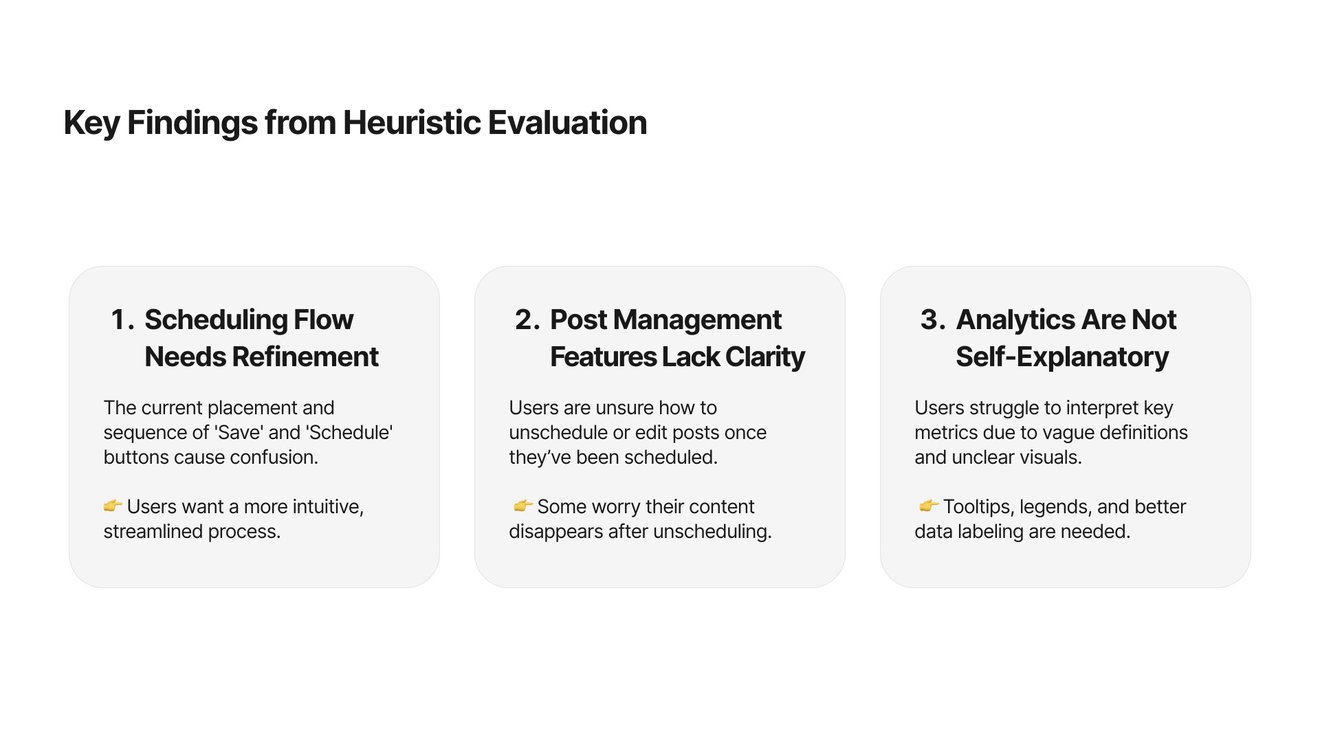
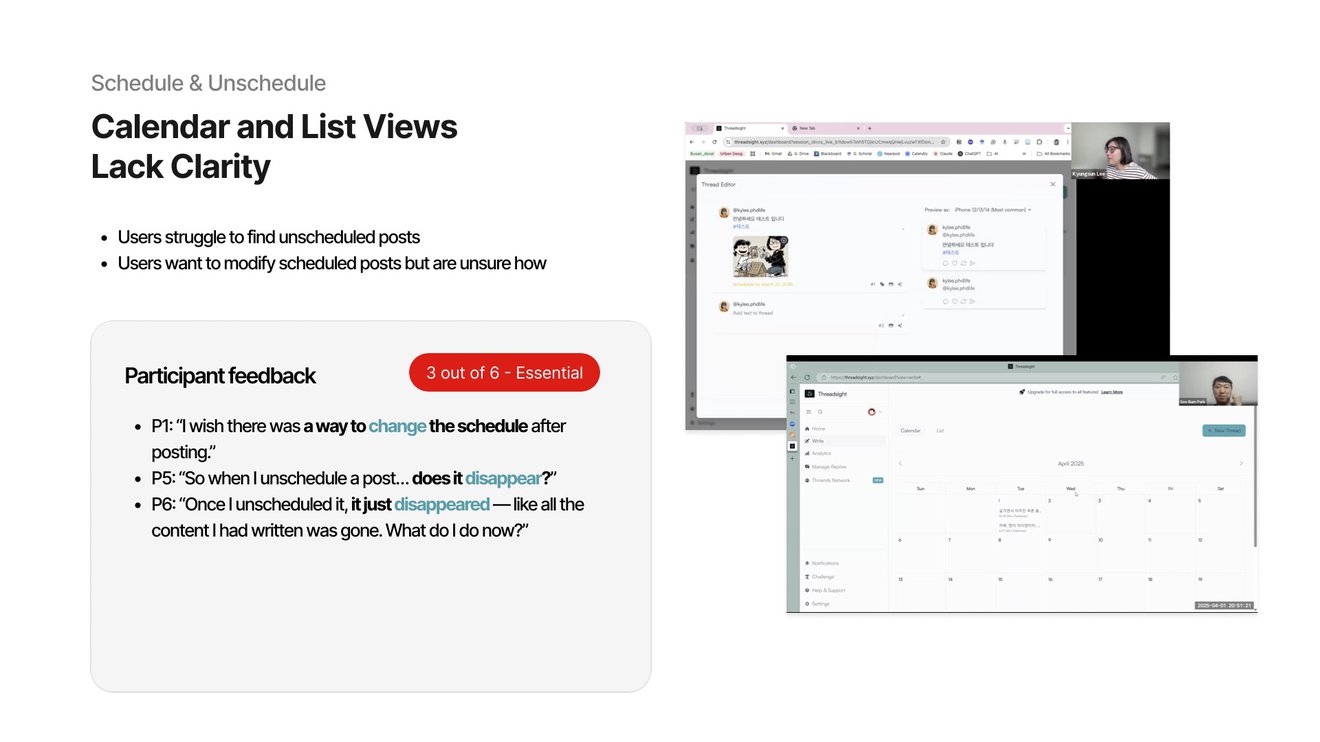
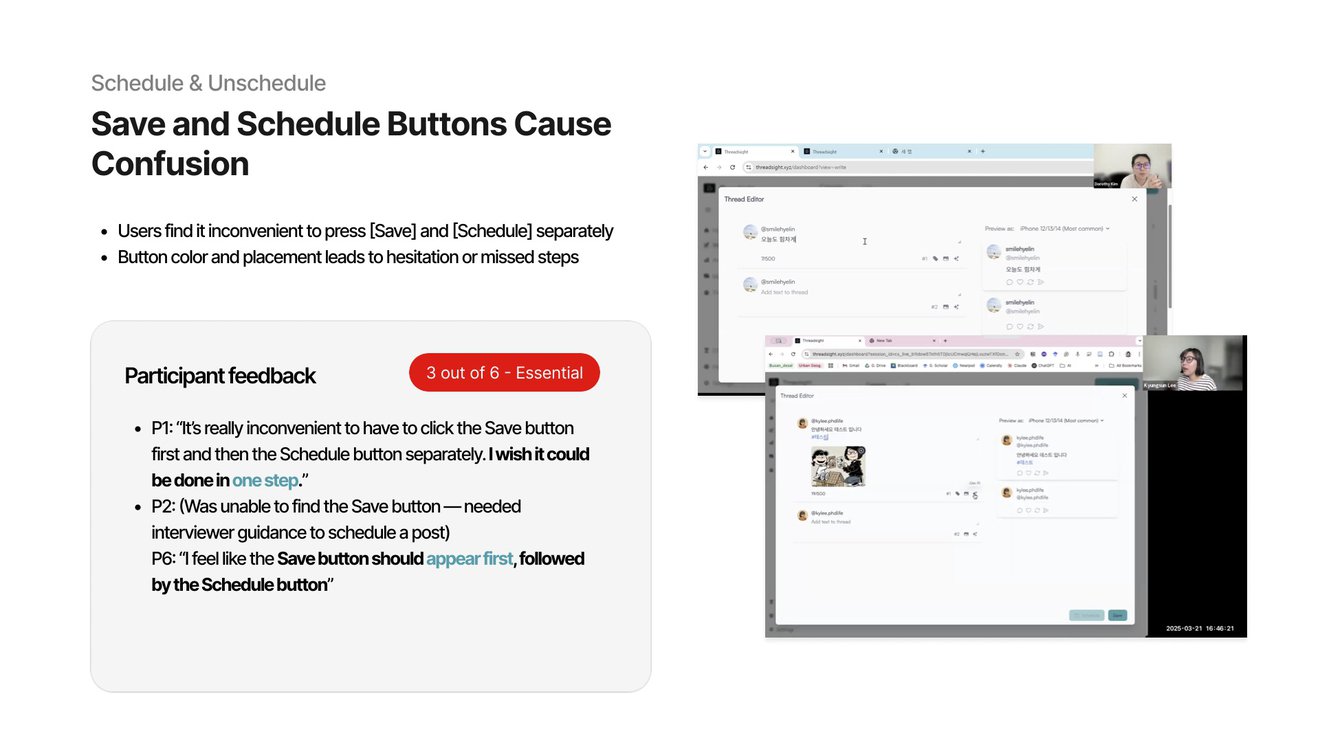
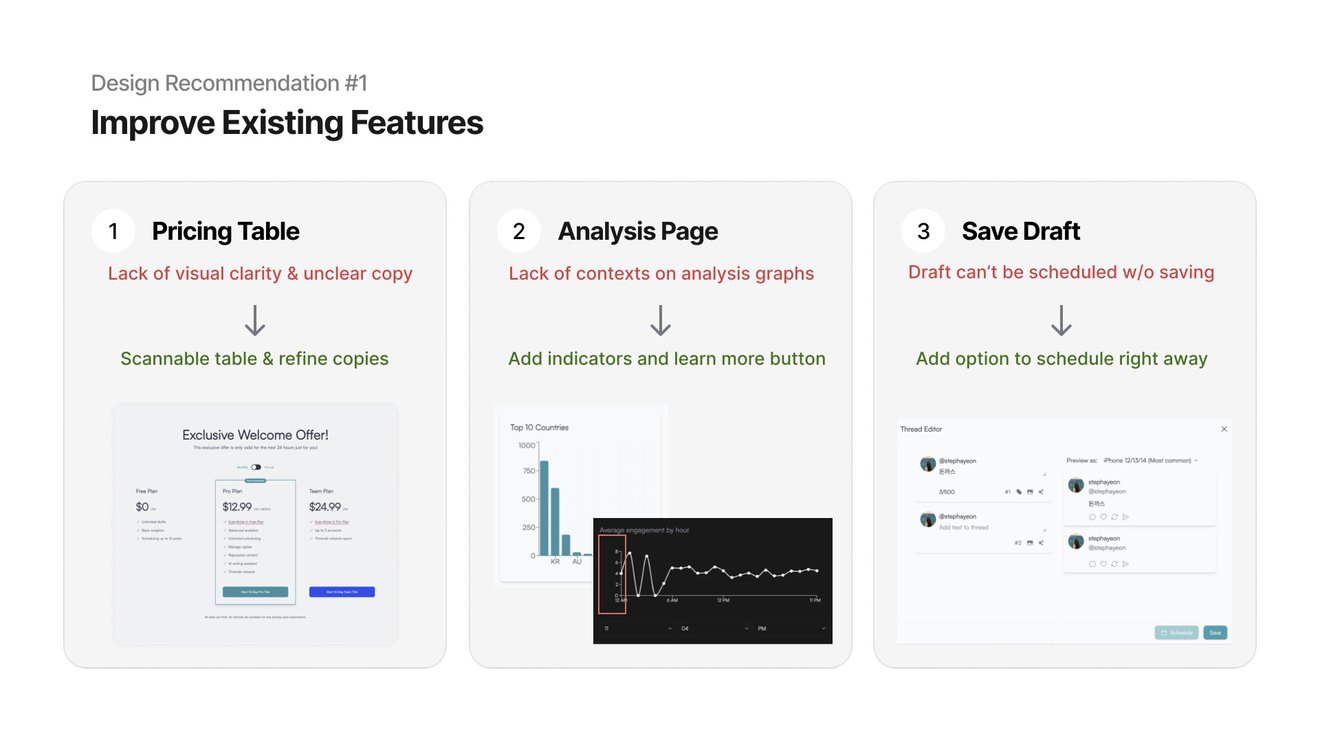
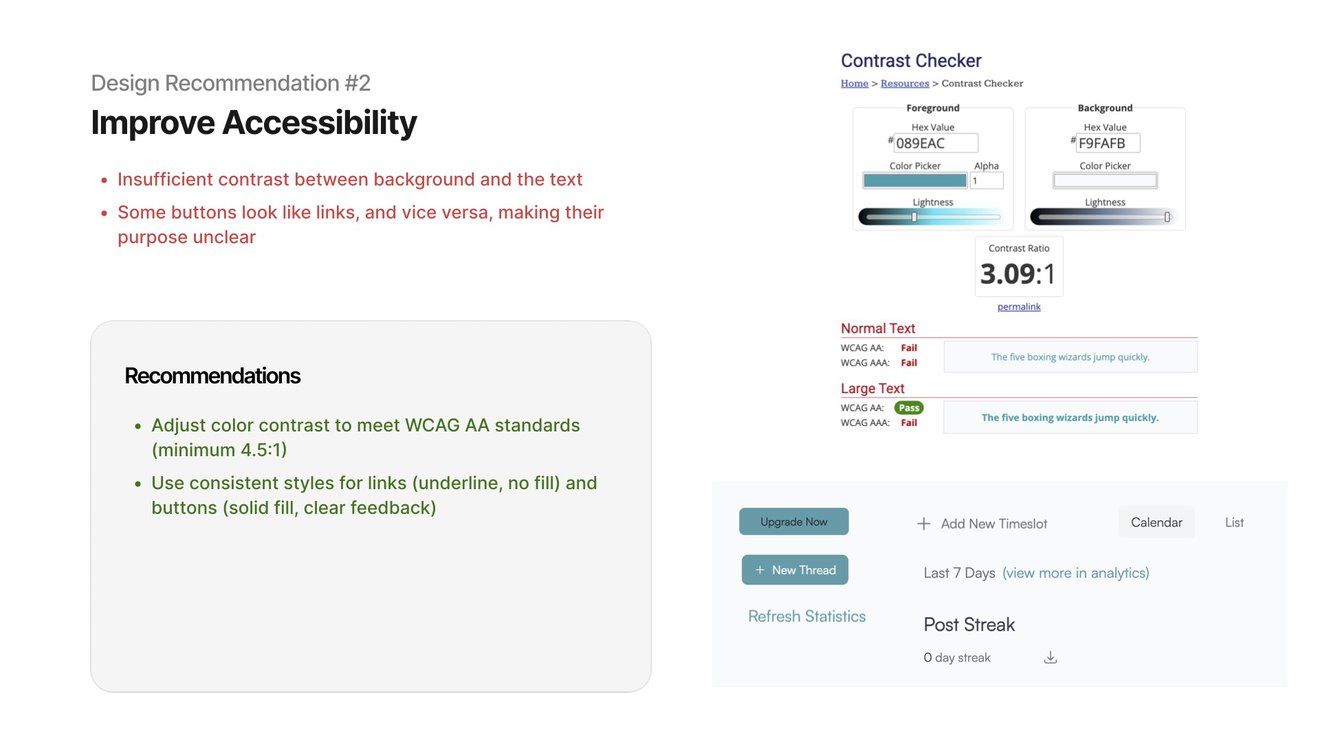
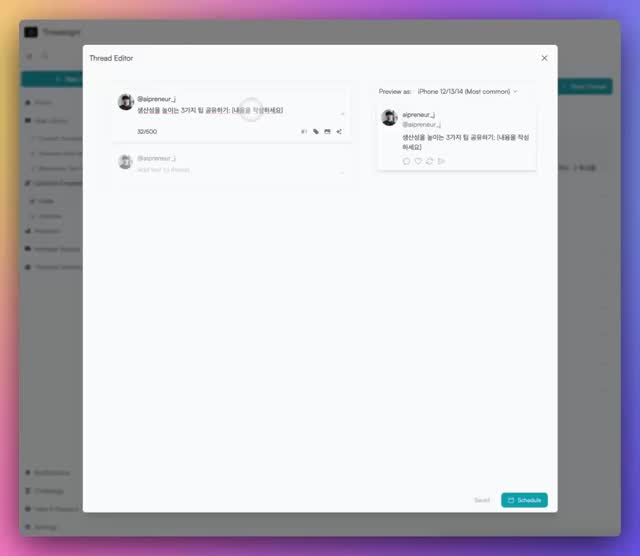
- Users found the save and schedule workflow tedious, requiring two separate steps
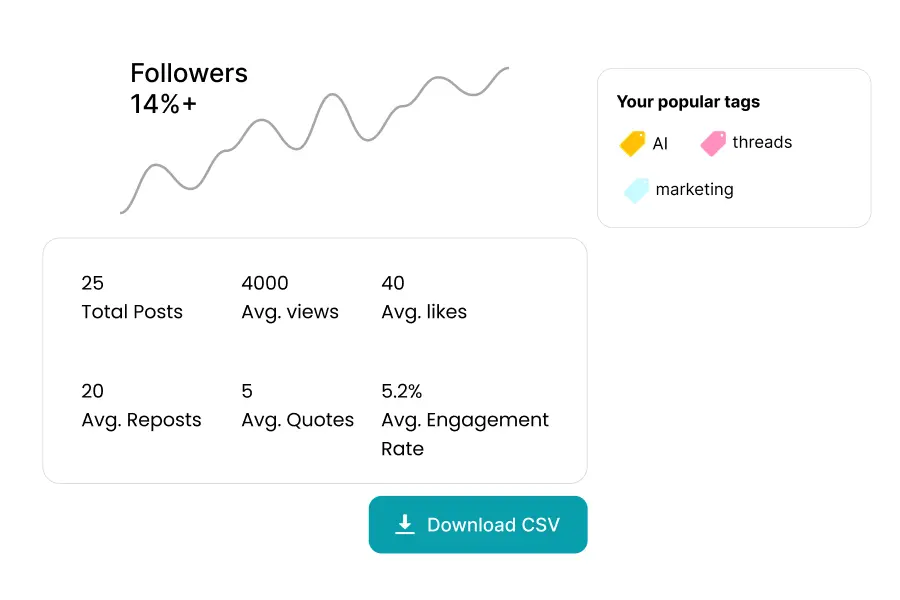
- Analytics visuals and wordings were confusing, with missing tooltips and unclear metrics
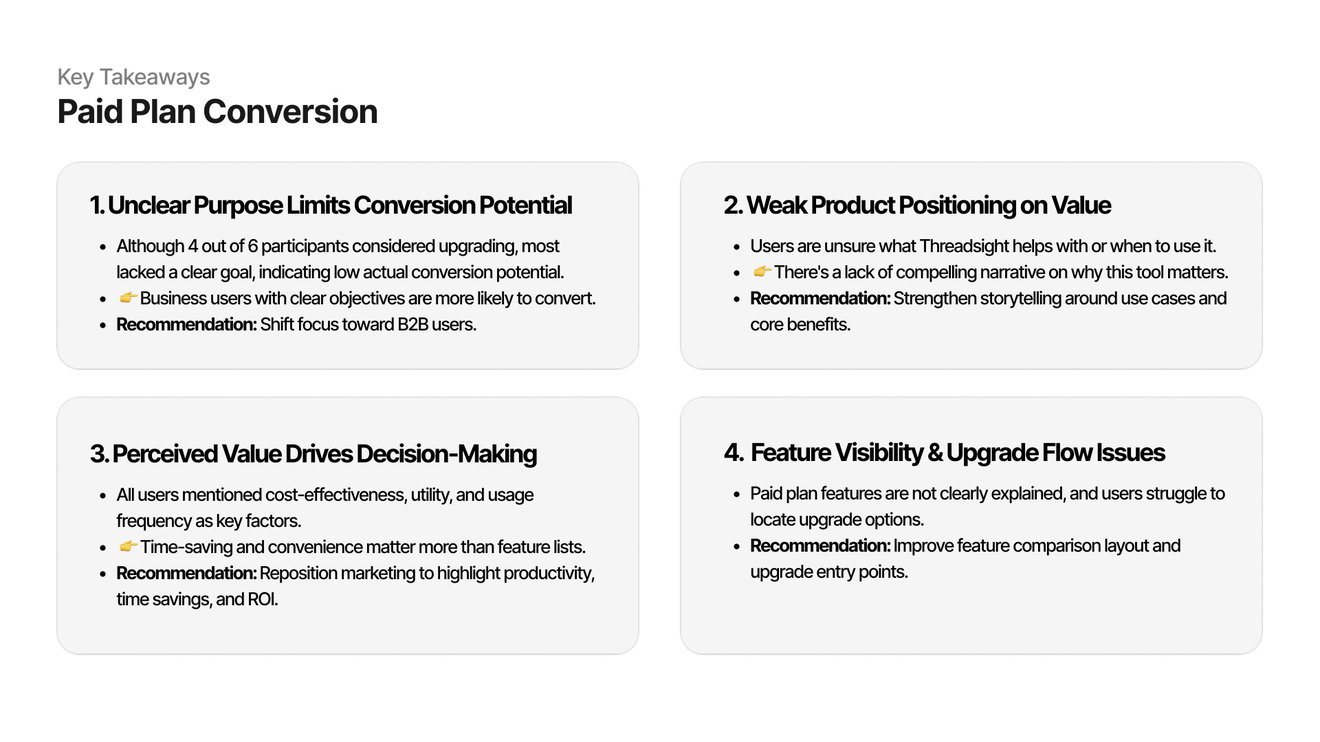
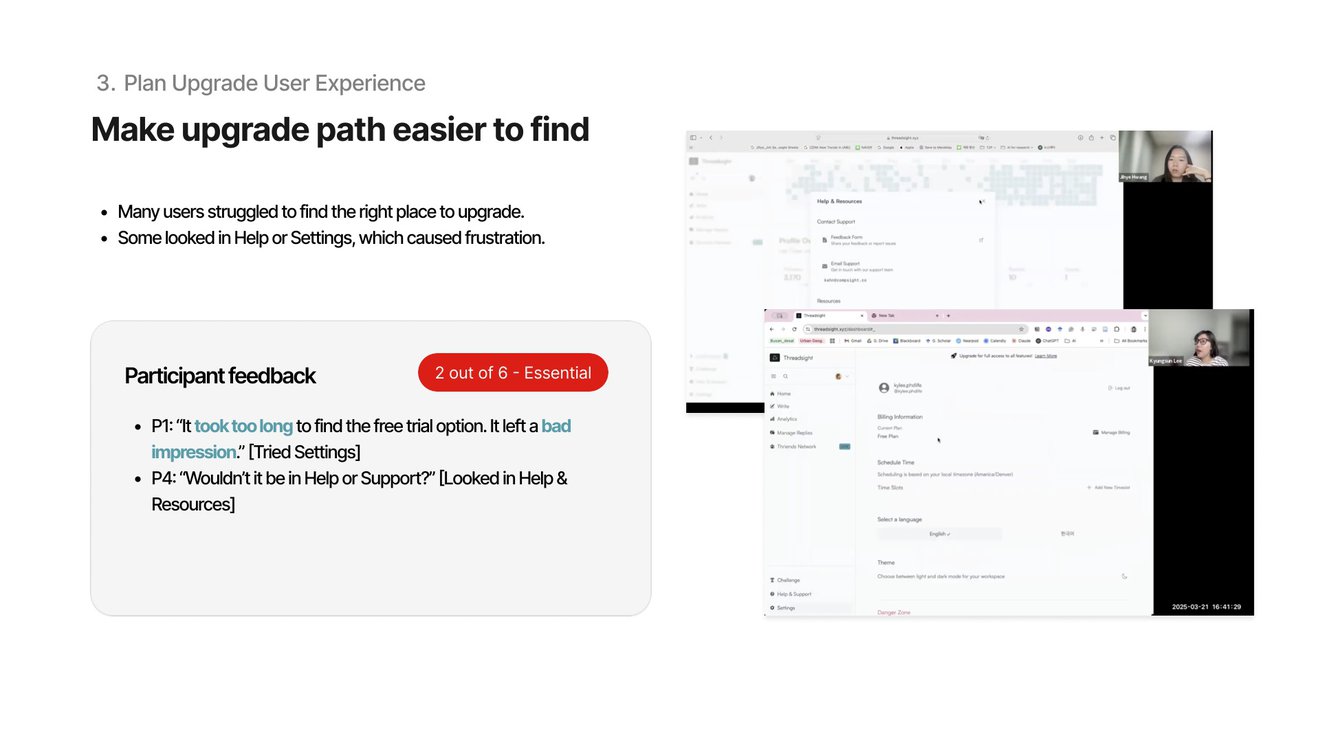
- Upgrade options were hard to find and difficult to understand
- Casual users did not immediately grasp the platform’s value or intended use cases
We translated these findings into clear, actionable design recommendations. One significant outcome is the “One-Click Scheduling” feature, which combines saving and scheduling into a single, streamlined action.
Results
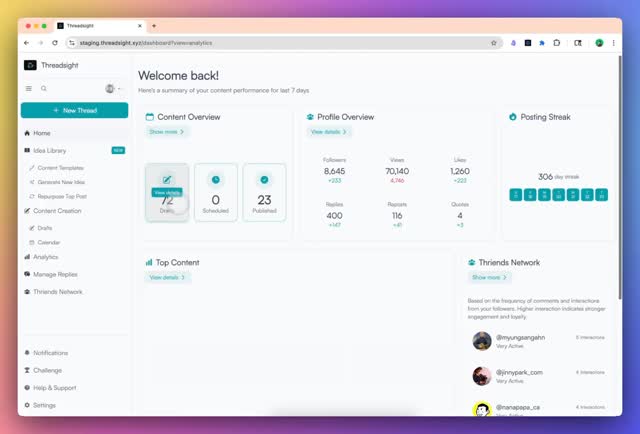
- Threadsight implemented our feedback into version 3, simplifying key workflows
- One-Click Scheduling, a top pain point, was resolved directly based on user feedback
- Product team repositioned Threadsight toward users with clearer business goals
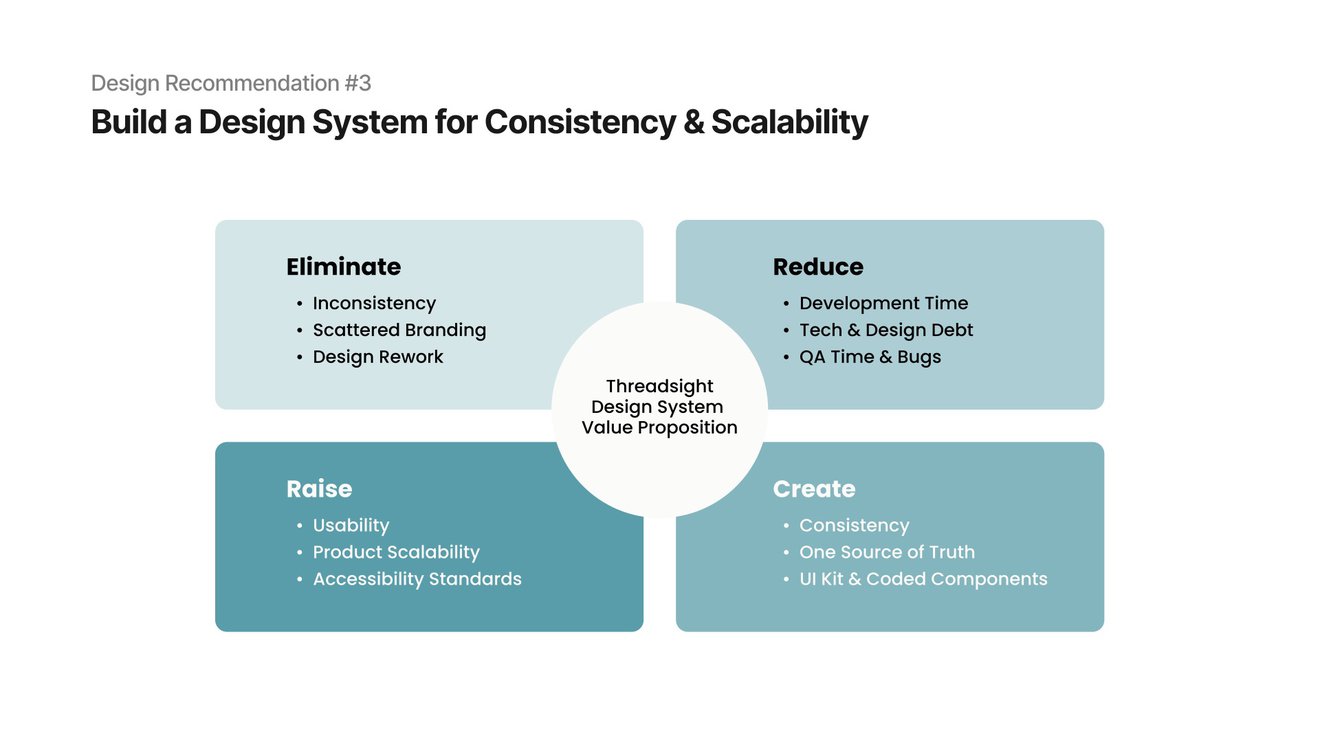
- Our research laid the foundation for improved upgrade flow, analytics clarity, and onboarding
Source and credits: Threadsight. The product and interface imagery is the author's own product and user-experience work.